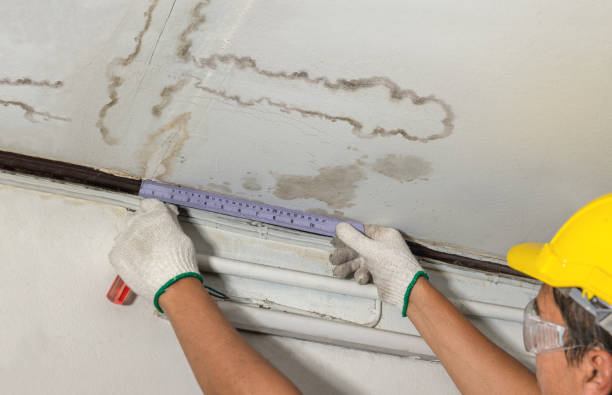
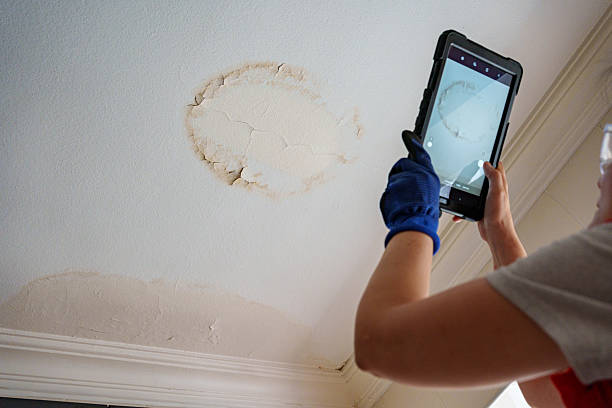
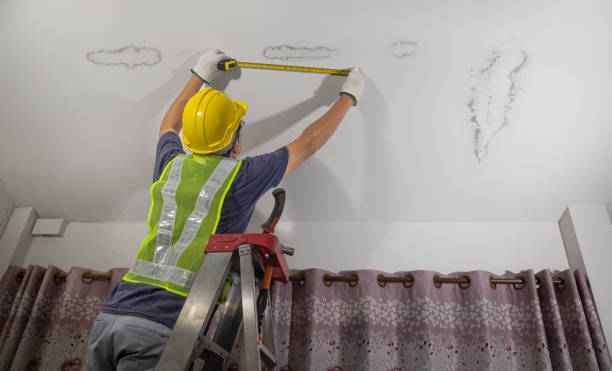
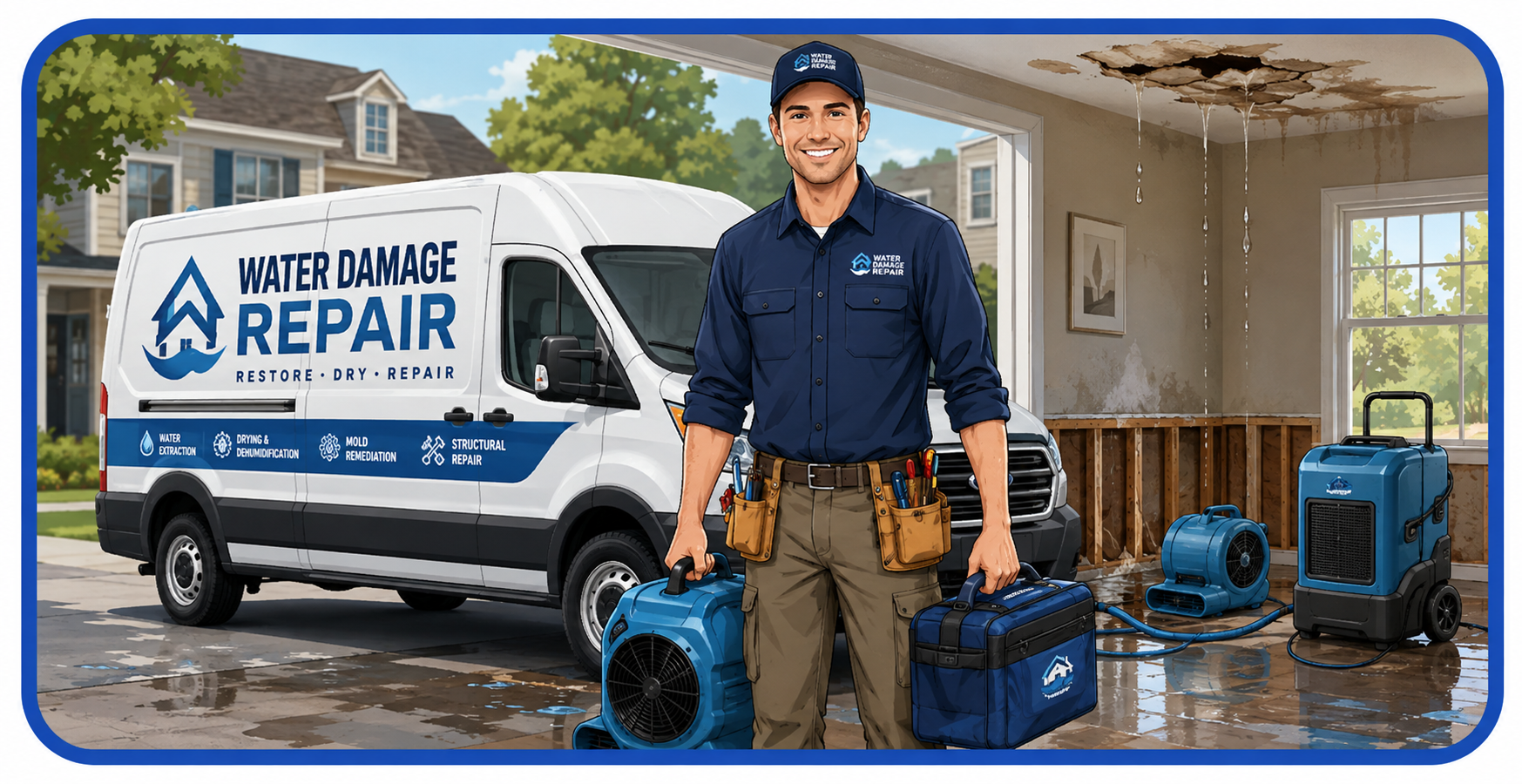
The storm tore a section of shingles off the roof, and wind-driven rain poured into the attic for hours. Now the insulation is soaked, the bedroom ceiling has a brown stain spreading across it, and more rain is in the forecast. Storm water damage comes from above, and the first job is keeping more of it from getting in.
Free referral to independent, licensed and insured local pros. Zip codes served include 68466.

We are a referral line, not a contractor. Calls are routed to independent local pros around Wymore who handle the full storm sequence, from covering the roof to repairing ceilings.
Roof tarps and board-up go on first, so drying is not undone by the next rain.
Local pros will still be here after the storm. That matters for follow-up work and questions later.
Confirm license and insurance before signing anything, especially after a big storm.
Detailed photos and moisture logs give your adjuster what they need to process the storm claim.

Storm restoration starts outside and works inward. Stop the leaks first, then handle the attic, ceilings, and walls.

Heavy-duty tarps are secured over damaged roof sections with battens so wind does not lift them, keeping rain out until permanent roof repairs.
Openings from broken glass or tree damage are boarded up to protect the home.
Wet attic insulation comes out, the decking and framing are dried, and fresh insulation is installed.
Stained or sagging ceilings are opened, dried, and replaced. Wall damage from window leaks or wind-driven rain gets the same treatment.
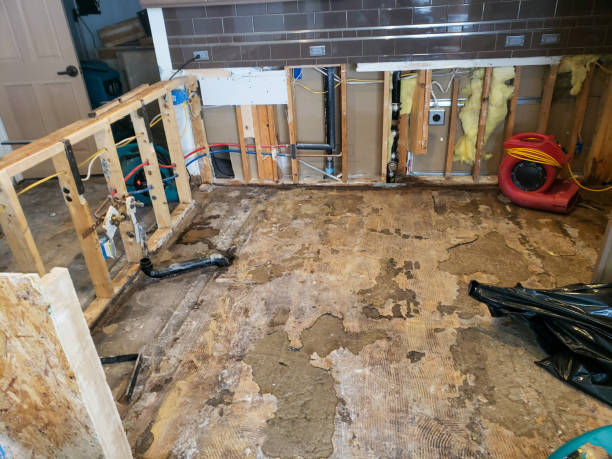
Air movers and dehumidifiers dry ceilings, walls, and floors below the leak until moisture readings confirm the structure is dry.
Tell dispatch whether rain is still getting in and where the damage is.
A local contractor calls with an arrival estimate. After regional storms, demand is high, and they will be honest about timing.
The pro inspects the roof line, attic, and interior, takes moisture readings, and gives you a written estimate before work begins.
The building is tarped or boarded, the interior is dried, and ceilings, walls, and insulation are repaired.
Get the roof tarped before the next round of rain.
Wind took a chunk of shingles off, and rain came into the attic all night. They had a tarp on by noon, pulled the wet insulation, and fixed the bedroom ceiling the following week.
Natalie G.Wind damage, attic and ceilingA branch broke our window. Board-up that night and the hardwood was saved.
Victor A.Tree limb, broken windowOut-of-town crews were knocking on every door. This contractor was local, showed me his credentials, and did not pressure me.
Brenda K.Hail and wind stormThe photos they took of the roof and attic made my storm claim simple. The adjuster approved it in one visit.
Luis F.Storm insurance claim

Climbing a wet, damaged roof is dangerous. A professional tarp is safer and more likely to hold. Many policies cover reasonable emergency tarping costs.
Damage from wind and rain entering through a storm-damaged roof or window is often covered. Rising floodwater from outside usually is not. Check your policy with your agent.
Ask for a local address, proof of license and insurance, and a written estimate. Be cautious with anyone demanding large upfront payments or pushing you to sign immediately.
Usually not. Wet insulation loses effectiveness and can hold moisture against the roof deck.
Within 24 to 48 hours. Mold can start growing on wet insulation, drywall, and wood framing quickly, and another storm can make it worse.
No. We connect you with independent local pros. Verify their license and insurance before work starts.

Calls from Wymore and zip codes such as 68466 are routed to local storm damage pros.
Nearby cities are listed below. After major storms, arrival times may run longer, and the dispatcher will be upfront about it.