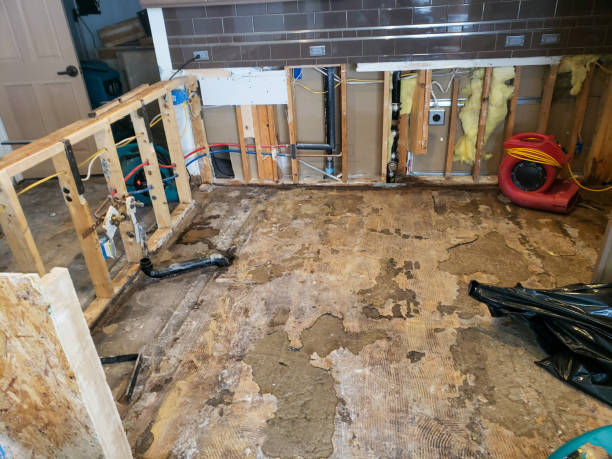
A main line backup sends raw sewage up through the lowest drains in the house, usually a basement shower, floor drain, or toilet. That water carries E. coli, hepatitis, and other pathogens. Safe cleanup means containment, protective gear, removal of everything porous it touched, and thorough disinfection.
One free call connects you with an independent local specialist. Areas served include zip codes 13069.

Sewage is a health hazard first and a water problem second. A Water Damage is a free referral service that connects you with independent, licensed and insured contractors near Fulton who are equipped for Category 3 blackwater, including protective gear, containment, and hospital-grade disinfectants.
Crews wear disposable coveralls, nitrile gloves, rubber boots, eye protection, and respirators so pathogens do not leave the work area on their clothes.
Plastic barriers seal off the affected area, and HEPA air scrubbers create negative pressure so contaminated air does not drift into clean rooms.
Confirm license and insurance on arrival. Biohazard jobs should only go to properly insured pros.
Pricing for each phase is written down and approved by you first.

Proper sewage remediation is methodical. Contamination is removed, every surface is disinfected, and only then does drying begin.

Liquid sewage and solids are extracted with dedicated equipment and disposed of according to local rules, not dumped down another drain.
Anything porous that absorbed sewage, like carpet, drywall, and insulation, is removed and bagged.
Concrete, framing, and tile are cleaned and disinfected with EPA-registered products at the correct dwell time.
After disinfection, HEPA air scrubbers and odor control treatments remove lingering sewage odor from the air and structure.
Cleanliness is checked, sometimes with ATP swab testing, before drying gets the area ready for rebuild.
Tell dispatch which drains are backing up and how far the sewage spread.
You will get an arrival time and safety reminders while the crew is on the way.
The pro sets up containment, assesses how far contamination reached, and gives you a written estimate before removal begins.
Contaminated materials are removed, surfaces disinfected, odors treated, and the area dried. The contractor may recommend a plumber to clear or camera the main line.
Raw sewage is a health risk. Get a protected crew out fast.
Our main line backed up into the basement. They sealed it off, suited up, removed everything contaminated, and the smell was completely gone.
Carmen E.Main line backup, basementThey explained why the carpet and bottom of the drywall had to go. Not what I wanted to hear, but it made sense once they mentioned what is in sewage.
Steve R.Toilet overflow into finished roomWith kids in the house, I wanted it contained. The plastic barrier and air scrubber kept it all downstairs.
Jenna P.Sewage backup, family homeThey recommended a plumber to camera the line afterward. Turned out to be tree roots. Glad we found it.
Omar H.Recurring sewer backup

It is Category 3, meaning grossly contaminated. That category triggers full biohazard protocols.
It depends on the size of the backup and where it is. Small contained areas may be fine with containment in place. Large backups, or households with infants, elderly, or immune-compromised people, often warrant staying elsewhere.
Tiny spills on tile may be manageable with protection. Anything soaked into carpet or walls should be handled by a pro.
Many standard policies exclude sewer backup unless you have a specific sewer or drain backup endorsement. Check your policy with your agent.
Common causes include tree roots in the main line, grease buildup, collapsed or bellied pipes, and municipal sewer overloads during heavy rain.
No. A Water Damage is a free referral service connecting you with independent, licensed and insured local contractors who do the work and bill you directly.

Calls from Fulton and zip codes such as 13069 are routed to local biohazard-equipped pros.
Nearby cities are listed below.